
Posted by Pack Ya Bags Travel on 11th Aug 2026
Best of South Korea: Food, Palaces & Autumn Colour Beyond Seoul Stopover
South Korea is often introduced to Australian and New Zealand travellers as a 48-hour stopover — and that’s a shame. Stay longer and the country opens up into a remarkably varied trip: palaces and street food in Seoul, ancient Silla history in Gyeongju, mountains blazing with autumn colour, and the seafood and coastline of Busan. If our earlier Seoul stopover guide planted the seed, this is the whole tree.
Seoul deserves four days
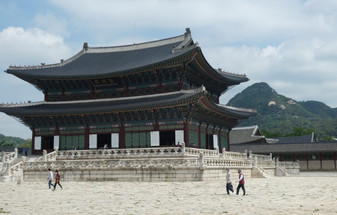
Gyeongbokgung palace at changing-of-the-guard, hanok lanes in Bukchon, the food alleys of Gwangjang Market (mung-bean pancakes, knife-cut noodles, raw beef tartare for the brave), night views from N Seoul Tower, and a DMZ day trip that turns news into geography. Seoul is one of the world’s great eating cities and among its safest and easiest to navigate — the subway shames most of the world.
Then the country opens up
Gyeongju — the “museum without walls” — was capital of the Silla kingdom for a thousand years: royal burial mounds rising out of parkland, the Bulguksa temple complex, lotus ponds. Busan brings the coast: Jagalchi fish market, the cliffside Haedong Yonggungsa temple, and Gamcheon’s painted hillside village. The KTX bullet train links it all — Seoul to Busan in about 2½ hours, no airport required.
Autumn is the trump card
From late September in the high mountains through October and into November in the cities and south, Korea puts on one of Asia’s great autumn shows — ginkgo gold in Seoul’s palace grounds, maple red across Seoraksan and Naejangsan, and spectacular colour around Gyeongju. The season generally moves from the mountains into the cities, and peak periods vary by altitude and region: in 2025, Seoraksan reached peak colour around 23 October, Bukhansan around 4 November and Naejangsan around 11 November.
That timing also makes Korea a useful alternative to Japan for travellers chasing autumn colour: the mountain season arrives earlier, while Kyoto’s famous foliage generally peaks later in November. Korea’s best-known foliage sites can still be busy, but the country offers plenty of spectacular colour beyond the headline destinations.
Spring has its own answer. Gyeongju is particularly beautiful when cherry blossom frames its ancient tombs, temples and lakes — in 2026 the city’s blossoms peaked around the end of March.
Korea plus Japan?
The pairing works beautifully: a week in each, connected by a short flight, one itinerary. Contrast is the point — Korea reads as bolder, spicier and more casual; Japan as quieter and more formal. Food-lovers particularly should do both while comparing kimchi jjigae to kaiseki.
Your questions answered
When is autumn colour season in Korea?
The high mountains start turning from late September, much of the country peaks late October to early November, and southern and coastal areas — including Busan — can run into mid-November. For the most popular foliage spots, book accommodation several months ahead.
Is Korea hard to travel without the language?
No — signage is bilingual, the rail system is superb, translation apps close the gaps and younger Koreans often speak some English. It’s one of Asia’s easiest self-navigating countries, and easier still on a packaged itinerary.
How many days does Korea need?
Eight to ten for Seoul–Gyeongju–Busan done properly; five if you’re bolting it to Japan.
Browse our Central & East Asia collection or ask the Pack Ya Bags team to build Korea into your next itinerary.